Entity SEO: The Hidden Ranking Layer Behind AI Search
13 min read
Discover how entity-based optimization powers AI search results and how to structure your website for knowledge graph dominance in 2026.
Read Analysis
Learn how LLMs choose sources, why brands disappear from AI answers, and how to optimize for the future of search.
Discover how entity-based optimization powers AI search results and how to structure your website for knowledge graph dominance in 2026.
Master Generative Engine Optimization (GEO). Discover the exact ranking factors, RAG mechanics, and reporting frameworks to dominate Google AI Overviews in 2026.
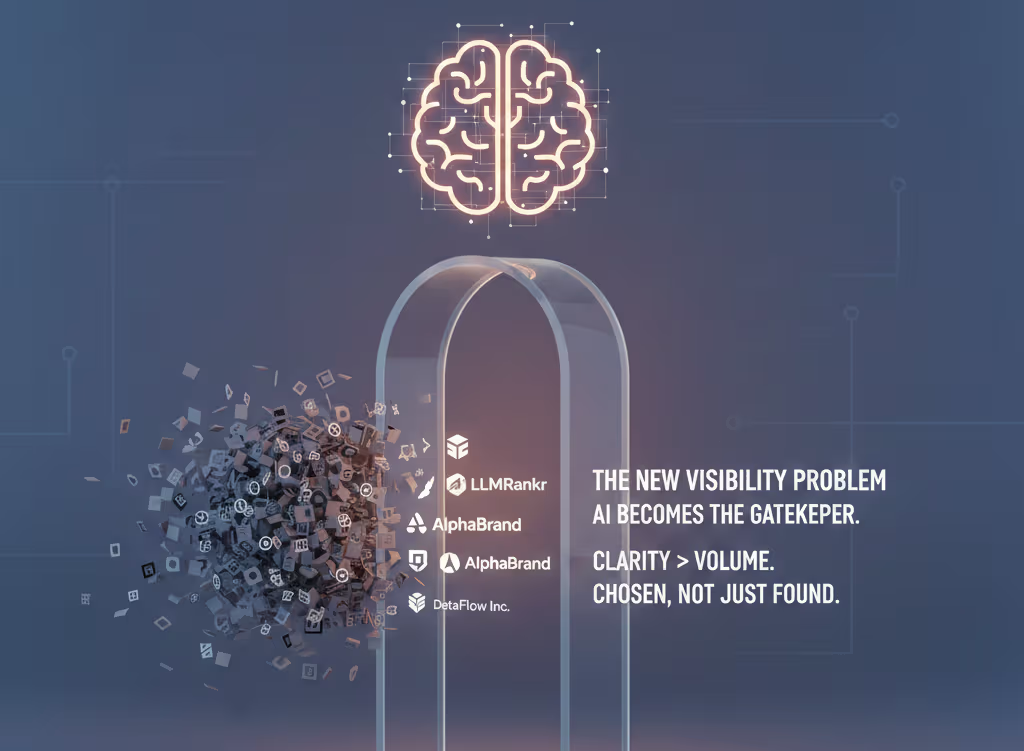
For a long time, marketers believed visibility meant rankings, impressions, or ad reach. If your brand showed up more often than competitors, you were winning attention.
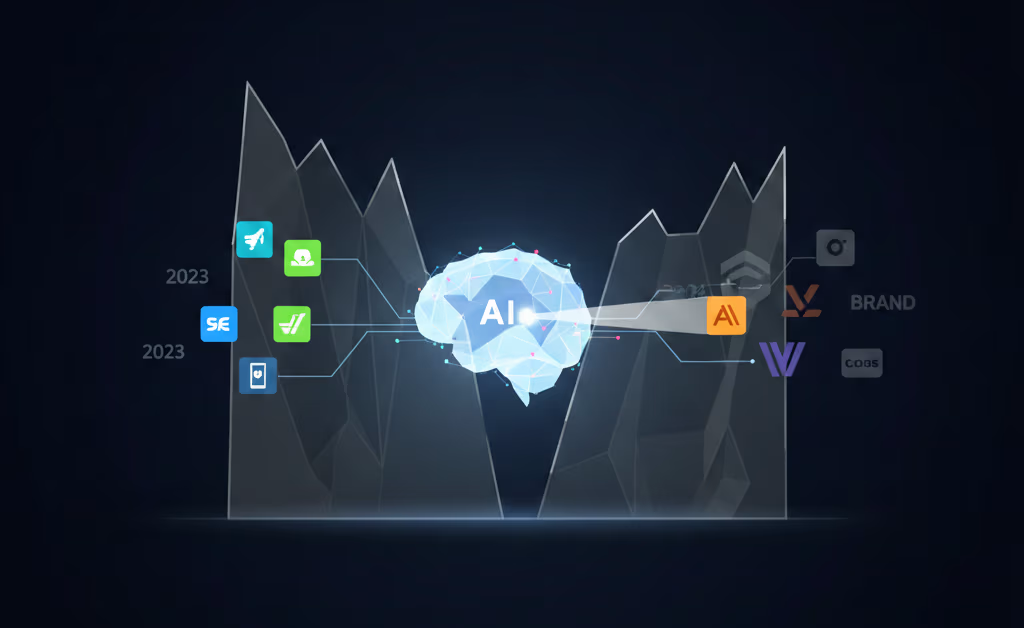
If you have ever asked an AI assistant about a company, product, or trend and received an answer that felt outdated or incomplete, you have already experienced the impact of knowledge cutoffs.
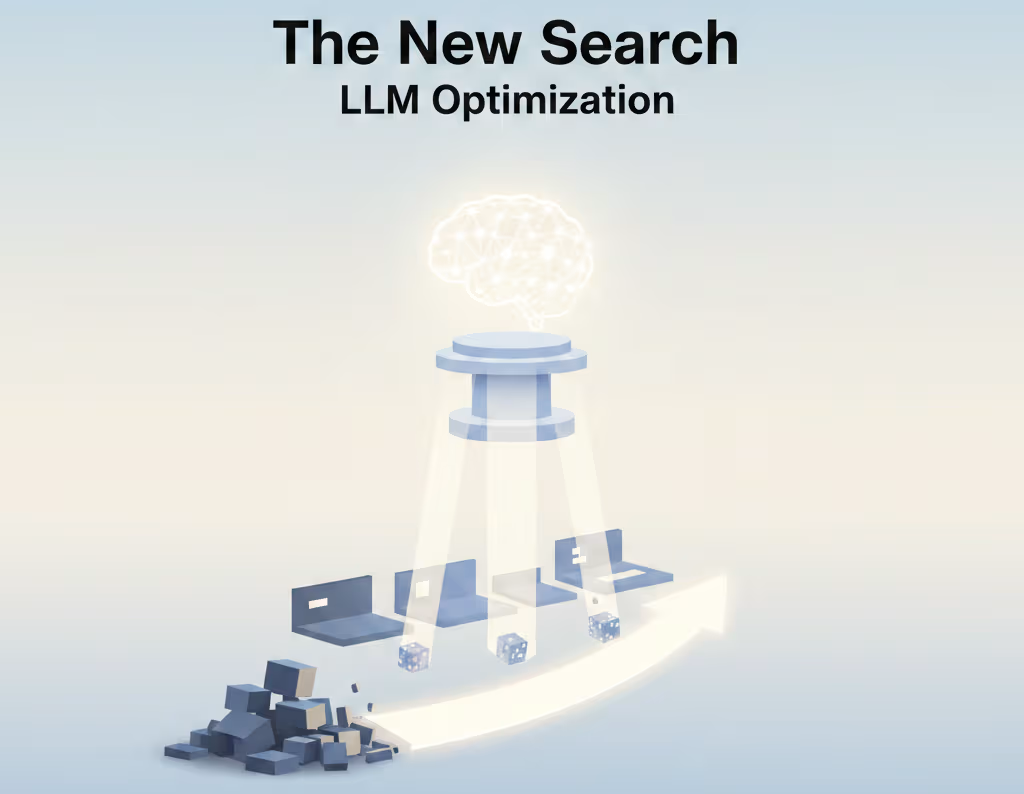
Search is changing faster than anyone expected. For more than two decades, brands have relied on traditional SEO to get visibility. Ranking on Google meant writing keyword optimized content, building backlinks, and hoping to land on page one.
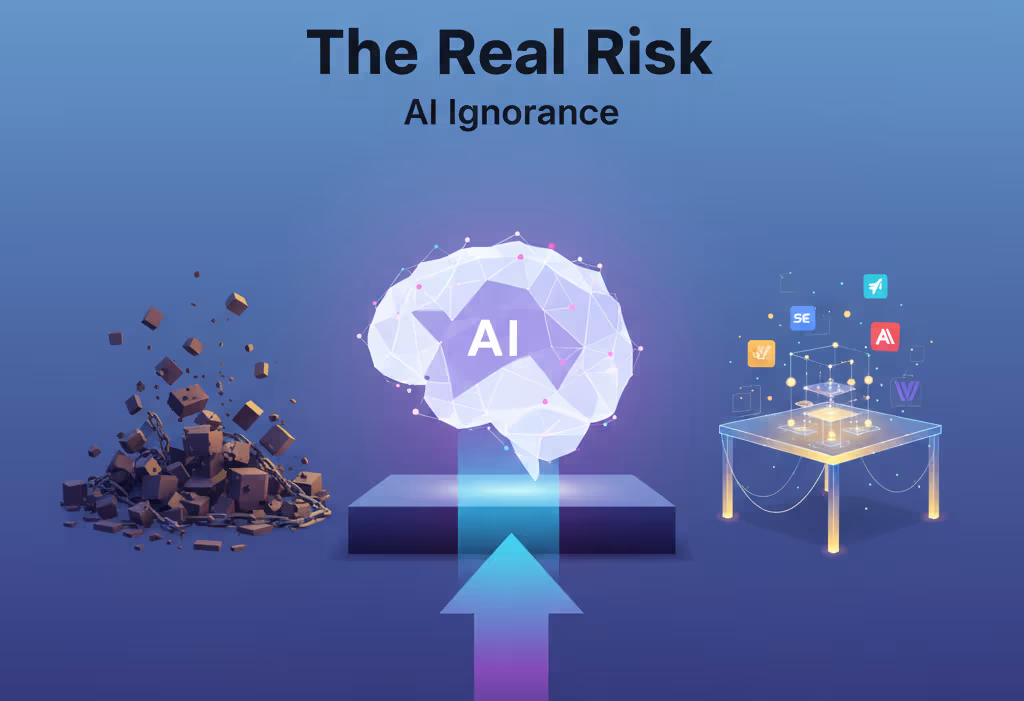
Everyone keeps talking about AI as the "future of search." But what most brands haven't realised yet is this: the real threat isn't losing rankings on Google, it's becoming invisible inside AI answers.
If you have ever asked ChatGPT or Gemini a question about a product, a market report or even a company's reputation, you may have noticed something surprising. The answers sound confident and complete but they almost never cite the brand's official website.

For more than a decade, backlinks were the backbone of SEO. If you earned links from strong websites, Google rewarded you with higher rankings. That formula worked well when search engines relied heavily on link authority. But the internet does not work like that anymore.
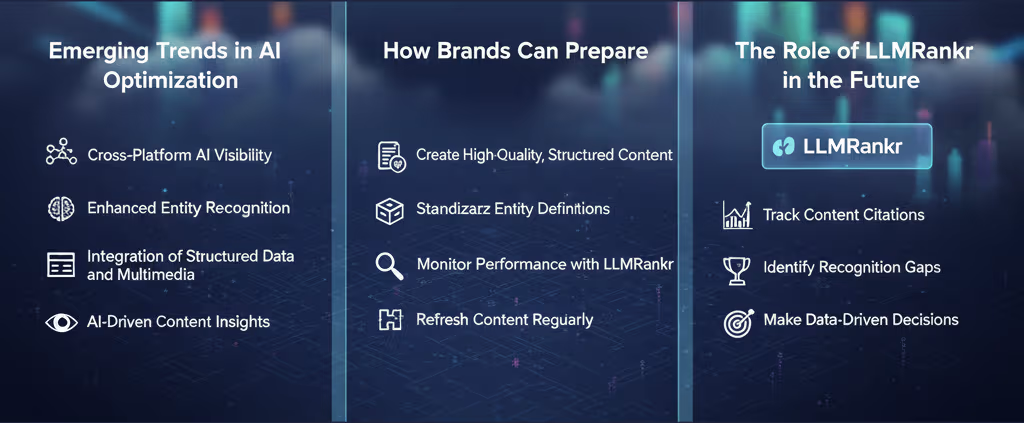
The future of brand visibility will be defined by AI recognition. Learn about emerging trends and how to prepare for an AI-first future.
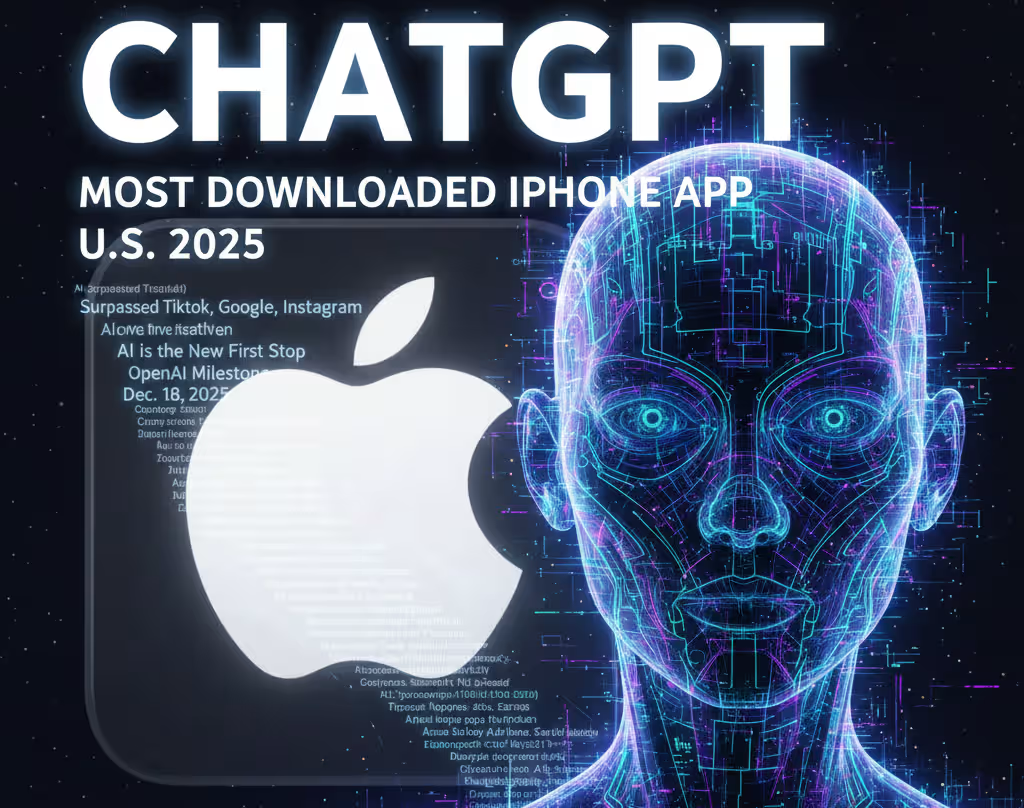
Apple's 2025 App Store rankings highlight the mainstream adoption of AI, with ChatGPT topping the free iPhone app list.
The competition in the AI landscape intensifies as Google launches Gemini Deep Research and OpenAI releases GPT-5.2.
In the AI-first world, content relevance is dynamic. Learn how to refresh your content to maintain visibility and trust over time.
AI systems consider engagement signals when determining which content to cite. Learn how user interactions influence your AI visibility.
Optimizing blog posts ensures that AI can extract information accurately and cite your brand confidently. Follow our step-by-step guide.
Semantic SEO and AI optimization are complementary strategies. Learn how context and entity relationships support AI recognition.
Learn how to ethically monitor competitor AI visibility to identify gaps and opportunities while maintaining originality.
LLM feedback can reveal gaps in clarity and entity recognition. Learn how to refine your content based on how AI interprets it.
Structured data provides machine-readable signals that AI systems rely on. Learn how schema markup and tables improve your AI visibility.
With ChatGPT topping the app charts, AI is becoming the primary way we find information. Learn why LLM ranking tools are now essential.
With AI assistants driving more user interactions, measuring ROI requires a new approach. Learn how to track citations and link visibility to revenue.
Content clusters are groups of related pages that explore a topic comprehensively. Learn how to structure them to increase AI citation frequency.
Ecommerce brands must optimize product and category pages for AI visibility to remain competitive in an AI-first era.
By 2027, AI assistants are expected to dominate online discovery. Learn about emerging trends and how to prepare for an AI-first future.
Traditional SEO audits are no longer sufficient. Learn about the key tools and processes for auditing your content for AI visibility.
Optimizing FAQ pages can dramatically increase the likelihood that your brand is cited in AI-generated answers. Learn how to structure them for success.
AI systems prioritize information that can be traced back to authoritative and verifiable sources. Learn the best practices for including references.
AI assistants use entity recognition to understand context. Learn the best practices for defining and referencing entities clearly.
Conversational AI is transforming how users seek help. Learn how to optimize your support content for accurate and helpful AI responses.
Auditing your content for AI visibility has become a critical part of digital strategy. Learn how to evaluate if AI systems can find and understand your content.
Learn the key errors that commonly reduce AI visibility and how to fix them to increase your citation likelihood in AI generated answers.
Understand how AI assistants evaluate conflicting information and how brands can maximize visibility by ensuring consistency and corroboration.
Learn how structured data and schema markup provide the clarity and extractability AI systems need to cite content confidently.
Discover how a mid-sized tech company transformed its AI invisibility into recognition and trust by adopting an AI-first content strategy.
Learn how to align your content with user intent to increase the likelihood of being cited by AI assistants like ChatGPT and Gemini.
As AI tools change how people discover information, many marketers question whether backlinks still matter. They do.
LLMO is not a replacement for SEO, but it is fundamentally different in its goal, methods, and success metrics.
Understanding the decision process AI assistants use to choose sources is essential if you want your content to appear in generated answers.
The rise of LLMs has fundamentally changed how users discover information, moving from search results to direct answers.
Being highly ranked in traditional search is no guarantee of AI visibility. Learn why some brands disappear from AI answers.
Over the past year, many brands have started noticing something unusual in their analytics. Traffic is arriving from sources that do not behave like traditional search or social media users.
Many brands assume that strong SEO automatically translates into AI visibility. Unfortunately, that is not how LLMs work.
You cannot optimize what you cannot measure. Yet most brands have no system for understanding how often they appear in AI generated answers.
As AI tools increasingly replace traditional search journeys, the way content is structured matters more than ever.
Trust is the currency of AI generated answers. Before an AI system can cite or reference a brand, it must understand exactly who that brand is.
FAQ sections are often treated as secondary content, but in the context of AI visibility, they are one of the most powerful assets a brand can create.
As AI assistants become a primary gateway to information, technical reliability is becoming a major factor in how these systems filter and trust content.
Optimizing for AI does not mean writing for machines instead of people. It means writing with clarity, precision, and intent.
AI systems do not rely on a single source to determine credibility. They look for patterns across the web. Brand mentions act as external validation.

Optimizing content for AI visibility is a long-term strategy. Learn the key metrics and tools to track your performance and authority.
The way people discover products is changing faster than ever. In 2025, customers are no longer scrolling endlessly or relying only on Google search results. Instead, they are leaning heavily on AI powered recommendation systems.
Over the past year there has been a clear shift in how people discover products online. Instead of typing a keyword into Google and scanning ten blue links many consumers now open ChatGPT, Gemini or Perplexity and ask for recommendations directly.
Today thousands of companies are investing in SEO, content and backlinks. But very few are optimizing for how LLMs understand and retrieve information. Most brand websites are not structured in a way that helps AI models identify key facts.
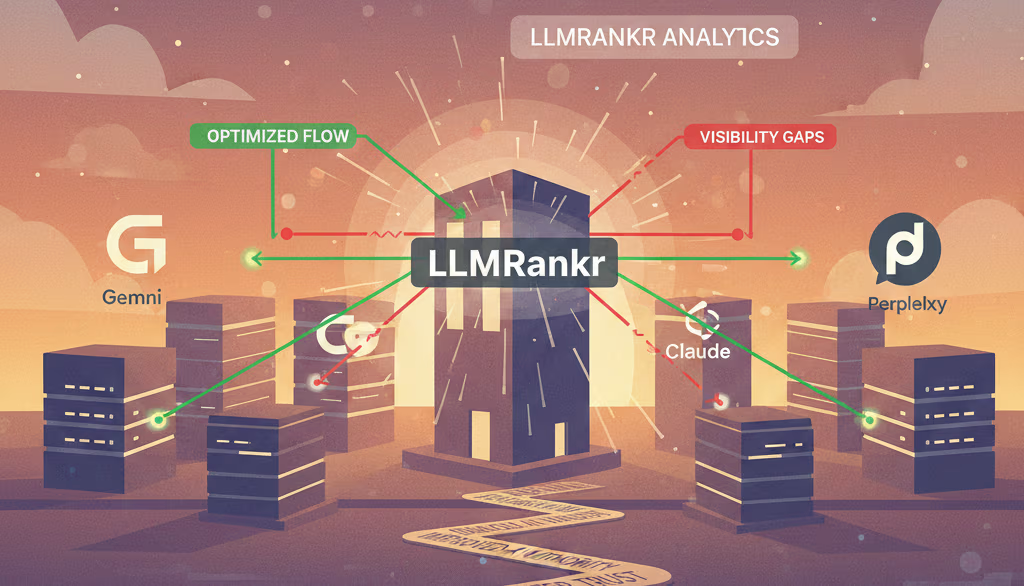
Multi-LLM optimization ensures that your content is consistently visible and cited across all major AI assistants. Learn the core principles and strategies.
Google introduces Gemini 3 Flash, a lightweight model designed for high performance and low cost, replacing Gemini 2.5 Flash as the new default.

OpenAI intensifies the AI rivalry with GPT Image 1.5, featuring 4x faster generation and improved editing controls.